
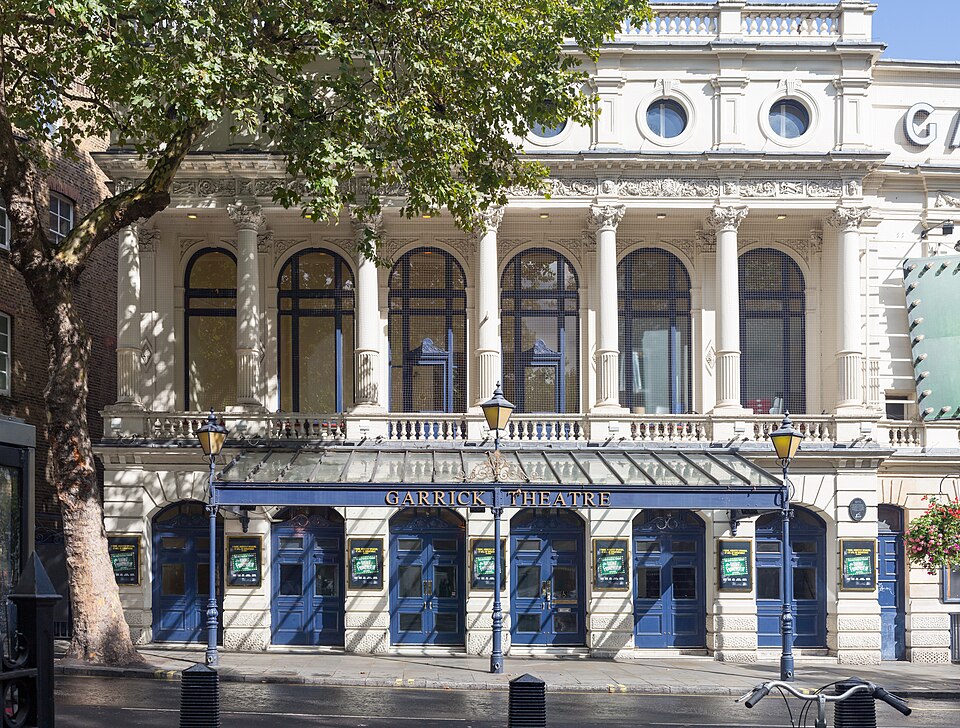
On 14 February 1935, The Stage reported that in the previous week thieves hid in the Garrick Theatre (WC2) after the end of the performance and spent the night there with the intention of breaking open the theatre safes in the manager’s office, in which the takings from Love on the Dole for that day and evening were presumably kept. They failed to break open any of the safes, ‘which luckily were new and of the latest burglar-proof type’, but stole a number of personal items belonging to theatre staff and actors, from both the dressing-rooms and the office, as well as ransacking the bars allegedly in search of cigarettes. The aftermath indicating the crime was discovered the next morning by the theatre manager, Mr W. M. Arthur. Personal items stolen included ‘a gold inscribed presentation-watch, an antique silver cigarette case, a wedding present from the late thriller writer Edgar Wallace (died February 1932) to Catherine Nesbit [playing Mrs Hardcastle], a rare edition of a book, the property of Walter Greenwood’ and an engraved gold fountain pen and pencil in case belonging to Mr W. M. Arthur’ (p.8). We know that Greenwood collected editions of George Bernard Shaw’s works once Love on the Dole began to bring in money, so perhaps this book was one of those which he had bought early on? See George Bernard Shaw, Wendy Hiller, and Walter Greenwood *.
Two other daily papers also reported the incident, nearer to its occurrence, adding a few intriguing and/or different or contradictory details. The Times on 8 February (p.11) reported the crime as one among three others reported that week in central London, or to be precise ‘the Police division of London which includes Finchley’. One was on the home of an Olympic and Cambridge runner living in Hampstead (NW3), and items stolen included Olympic and other medals, while another was in a home in Winchmore Hill (N21), where sports trophies were taken, valued at around £200. However, the report did not make much of the unusual setting of the third burglary in a theatre, nor remark on its rather different nature from the other two burglaries. It did report that the thieves had failed to break open any of the theatre’s safes, specifying that there were three, ‘though they had struggled hard’, and had escaped ‘only with a quantity of small items, such as an alarm clock, and refreshments’, and, that apart, ’empty-handed’. The term ‘refreshments’ might suggest alcohol or chocolate rather than the cigarettes suggested by The Stage report. Sadly, The Times showed no interest in the rare book theft, not even reporting it, let alone as I hoped giving the book’s author, title, publication date, and condition, including absence or presence of dust-wrapper. The Liverpool Echo on 7 February did a little if not much better on that front, noting at least that ‘a valuable book’ was taken along with ‘a fountain pen, pencil, and a presentation watch’. The antique cigarette case, with its (I would have thought) interesting theatrical associations, was not mentioned, but the paper gave a different perspective on the alarm clock, seeing it not as a stolen item but as a tool of the trade of burglary and part of a specific plan: ‘during the night [the thieves] slept in the manager’s office, and took an alarm clock with them, which they set for 5.45 a.m’ (the early burglars presumably catch the dosh, or anyway can make their get-away before the theatre staff arrive for another day behind the scenes).
I feel there was a slight lack of curiosity on the parts of all three papers, though the Stage did best, no doubt conscious that the crime took place on its own (occupational) patch. However, I am myself very curious about this odd incident and would like to have the answers to a number of questions, which I am aware I will not get at this stage, but would anyway like to pose. Did the three thieves pay for their theatre tickets? Did they get any sleep in Mr W.M. Arthur’s office? Did they think a theatre would be a soft target? Did they think their haul would be worth the risk? Did they manage to sell on what stolen goods they did get away with, most of which sound rather easily identifiable?
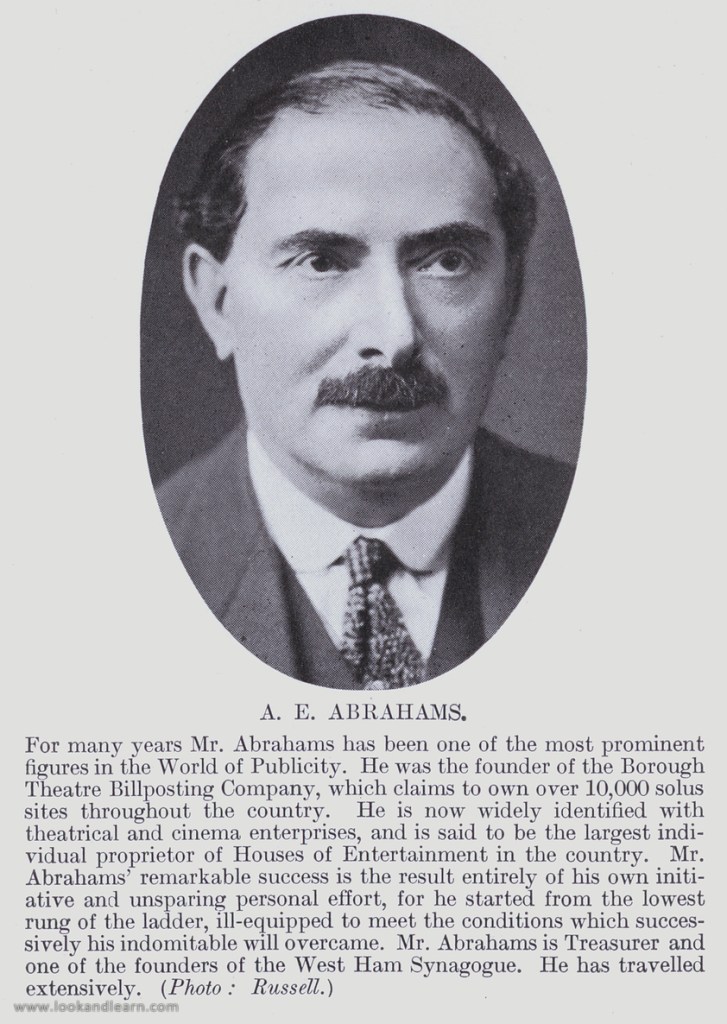
Most of these questions remain unanswerable because the three thieves do not seem to have been caught and were therefore – in a rather specialised sense – not interviewed. There is no follow-up press report of the thieves being identified and arrested nor anything about any recovery of the missing objects. However, one question can be addressed – would it have been worth it if they had successfully pulled off the job? W.M. Arthur’s boss, A.E. Abrahams (1873-1966), the owner of the Garrick, and many other theatres, certainly told the press some eight months later in September 1935 that Love on the Dole was ‘running successfully’ at the Garrick – though he had a problem in having already signed a contract for a new revue to replace it there in October 1935 (Daily Herald, 16 September 1935, p.6) Abrahams had presumably not anticipated the longevity of Greenwood and Gow’s success – indeed the Daily Herald said on 9 October 1935 that it ‘had proved an embarrassing success’ to him (p.3) . The Wikipedia entry for the Garrick claims that the theatre had not been doing that well in the mid-thirties and that Love on the Dole ‘restored the profitability of the theatre’ (https://en.wikipedia.org/wiki/Garrick_Theatre). Certainly, as also referred to by the Wikipedia entry, Abrahams who was developing cinema interests was reported during 1934 to be planning to demolish the 1889 theatre (originally built and owned by W/S. Gilbert) in favour of a new cinema, suggesting it was then doing less well:
TO TAKE PLACE OF GARRICK LUXURY CINEMA TO BE BUILT Plans for demolishing the Garrick Theatre. Charing Cross Road WC2 and erecting on the site a luxury cinema with a seating capacity for 1, 500. are being considered by Mr. A E. Abrahams, who owns more theatres than anyone else in this country. Rumours about the proposed cinema have been current in the United States for many months. Mr Abrahams project has been linked with Mr Joe Schenk’s £l, 300, 000 deal to take over two the leading British him companies – London Film Productions. Ltd and the British and Dominions concern, and merge the distribution of their productions into the United Artists organisation (Daily Herald, 11 July, 1934, p.9).
This plan for the Garrick at least was never fulfilled, but suggests Abrahams’ ambition and the scope and scale of his cinema and theatre business interests. Though surely on a smaller scale, I take it that Abrahams did not regret hosting Love on the Dole at the Garrick. I have found only one image of him, which also has an informative caption about his life and some of his work.
We also have evidence from the authors’ mouths about the financial as well as critical success of their play. The Daily Mirror reported that Greenwood earned ‘£100 per week’ from the play version and that he is also quoted as saying (which mathematically follows) that he had earned ‘around £5000 in the year after the play was put on’ (11/9/1937). If he earned £5000 from the play version of Love on the Dole in a single year then he was certainly making a very good living from his writing (and presumably that was not the whole income from the play, since Ronald Gow must surely have been drawing a fair share too – indeed the Era noted as early as 20 June 1934 (p.16) that Gow had ‘made an appreciable sum of money out of Love on the Dole in Lancashire theatres alone’ before the London opening). When Greenwood was interviewed by the Sheffield Independent in April 1935, he told the paper that as a result of the play ‘he had more money than he would have earned in ten years as a working man’ (9 April, p.4; Greenwood’s finances are further discussed in Walter Greenwood’s Finances and Love on the Dole * where some of these figures first appeared). If these were the sums the two authors were able to draw then the Garrick and its owner, having met liabilities, must surely also have been making good money. We know that most performances played to full houses during 1935, and that the theatre may (according to the Arthur Lloyd site referred to above) have seated up to 1,250 at this period, though it now seats only 735, and that Love on the Dole was performed nightly, and at matinees on Wednesdays and Saturdays. I do not know how often the takings were banked.
In short, it seems likely that those three safes contained potentially large quantities of cash in those days of a largely cash economy. The three thieves were perhaps not like the other two housebreakers reported on in The Times, one of whom was estimated to have got away with property worth about £200, but may, having read in their newspapers about the success of Love on the Dole, been thinking on a grander scale and hoping to scoop up maybe some thousands of pounds from the profits of legitimate theatre (it was, of course, not an inside job in the usual sense, but was in an unusual sense). Their plan is yet another, if unusual, witness to the fame and success of the play in 1935. Which leads me to my final unanswerable question – did they, in the opening few hours of their plan, enjoy the play as such a wide variety and range of other audiences did? Or were they unimpressed by the Hardcastle family’s in the end defeated struggle to stay respectable and honest despite how they had been treated? Even if so, perhaps they might have enjoyed the less strict moral codes and comedy provided by Mrs Dorbell?


